
Cambridge News Article - Enviro Trust to Grow
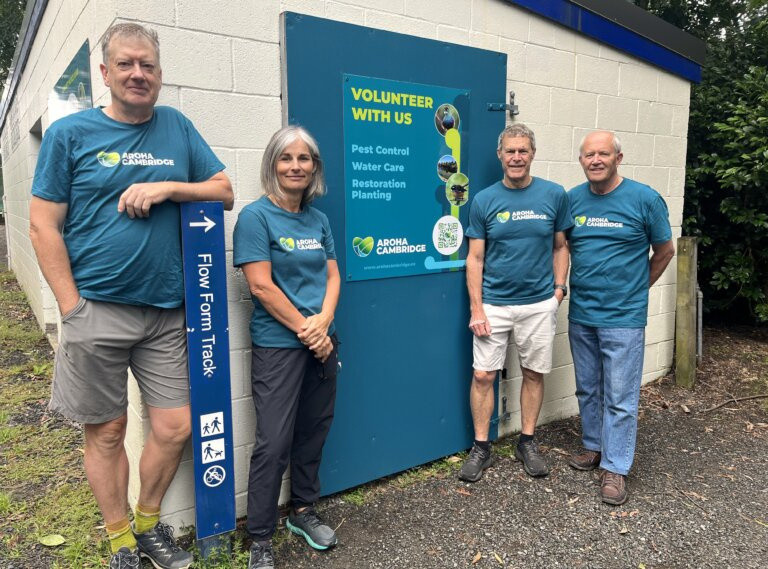
A great Article from Cambridge News on the 12th Feb 2026…
Seven months after establishing itself as a registered charitable trust, Aroha Cambridge wants to build its volunteer base and broaden awareness of the work it is doing to protect the town’s natural habitat.
The Aroha Cambridge Charitable Trust was set up last July to educate and connect people interested in restoring and protecting Cambridge’s natural environment.
It is building on the success of Predator Free Cambridge in that its activities go beyond predator control to include other rehabilitative measures such as pest plant control, native replanting and water quality restoration.
At the heart of it is connecting like-minded people who want to be included, said Aroha Cambridge co-chair Di Tocker.
“We want to encourage community engagement… create an awareness around what we’re doing,” she told The News. “We already have 70 volunteers and would like more as we’re in the process of establishing more roles, outside trustee roles, within our organisation.”
She said volunteers have previously worked predominantly in silos. Aroha Cambridge wants people to work more effectively together to ensure wider pest control coverage.
“We open the first half hour of our monthly meetings to the public. We want to work in collaboration with any established conservation group that has the same goal as us. As we see it, this needs to be a team effort.”
Trustee Peter Russell said the formation of the Aroha Cambridge charitable trust effectively expands funding support. “We don’t know what environmental concerns we will face in the future. This work needs to be for future generations.”
Tocker said much had already been accomplished since Aroha Cambridge was formed.
Five trustees have been appointed, a website launched, the renovation of the group’s storage shed-workshop, and Aroha Cambridge’s presentation at Pestival in Hamilton, an event held last November by Go Eco and the Waikato Environmental Centre.
The group has also completed an audit of 23km of existing public traplines, the first in eight years, and has work started on the group’s first environmental restoration project being done in partnership with Waipā District Council.
The latter is a community-led environmental restoration project around the transformation of 1.4 hectares of land. It began last July, replacing invasive weeds with native plant species along the walkway between Payne Park and the Te Awa River Ride. The project will aid in the expansion of the Te Puna Marama, or Moon Spring, ecosystem.
The shed has two main areas, one filled with traps and other items while the other is a locked space for the safe storage of bait. The group has a loan library of traps; it offers support around predator control and runs a detailed database on predator numbers caught.
Fellow Aroha Cambridge trustee Keith Scarlett said work done by Predator Free Cambridge, who formed in 2017, succeeded in reducing possum numbers at Lake Te Koo Utu from 180 in their first two years of operation to just one last year.
The group is keen to talk to schools about their work and get younger people involved as part of a longer-term succession plan to secure the town’s natural habitat for future generations.